
Our Services
Cardiology Services in Istanbul

At a Glance
Cardiology Services Istanbul: provides evidence-based cardiology services for international patients seeking individualized cardiovascular care Istanbul. Book a cardiology appointment Kozyatağı. Assessment is individualized around symptoms, risk factors, and appropriate testing.
Cardiology Services in Istanbul — What Is It?
What is Cardiology Services in Istanbul? provides evidence-based cardiology services for international patients seeking individualized cardiovascular care Istanbul. Book a cardiology appointment Kozyatağı. The goal is a clear, indication-driven plan—avoiding unnecessary testing while giving patients an understandable next step.
Dr. Sinan Coşkun Turan reviews symptoms, medical history, ECG/echocardiography findings, and advanced imaging when needed as part of Cardiology Services in Istanbul. Appointments can be arranged for patients in Kadıköy, Kozyatağı, Ataşehir, and nearby districts, including international patients seeking English-speaking cardiology care in Istanbul.
After evaluation, patients leave with a plain-language explanation of findings, priority lifestyle and follow-up steps, and—if required—options for further testing or treatment. Questions remain welcome throughout the pathway so decisions stay shared and informed.
In-Depth Information
Cardiology Services Comprehensive Cardiac Care for International Patients in IstanbulDr. Sinan Coşkun Turan provides evidence-based cardiology services for international patients seeking individualized cardiovascular care in Istanbul.
Located in Kozyatağı, Kadıköy, Istanbul, the practice welcomes expatriates, international residents, business travelers and visitors seeking an English-speaking cardiologist.
The goal is to provide accurate diagnosis and personalized treatment while avoiding unnecessary investigations and procedures.
Cardiology Consultation
Every evaluation begins with a detailed cardiology consultation.
Clinical decisions are based on:
- Symptoms
- Medical history
- Cardiovascular risk factors
- Physical examination
- Previous investigations
- Current medications
Diagnostic tests are selected according to medical necessity rather than routine packages.
Electrocardiography (ECG)
Electrocardiography is one of the fundamental tools in cardiovascular medicine.
ECG may provide valuable information regarding:
- Heart rhythm
- Heart rate
- Conduction abnormalities
- Atrial fibrillation
- Previous cardiac events
ECG findings are always interpreted together with the clinical context.
Echocardiography
Echocardiography is an ultrasound examination of the heart and one of the most important diagnostic tools in cardiology.
It may be useful for evaluating:
- Cardiac function
- Heart valves
- Chamber dimensions
- Heart failure
- Structural heart disease
When clinically indicated, echocardiography can often be performed during the consultation.
Holter Monitoring
Holter monitoring provides continuous recording of heart rhythm or blood pressure over an extended period.
It may be recommended in patients with:
- Palpitations
- Suspected arrhythmias
- Dizziness
- Syncope
- Hypertension
- Atrial fibrillation
Both rhythm Holter and ambulatory blood pressure monitoring are available when appropriate.
Hypertension Management
Hypertension is one of the most important cardiovascular risk factors.
Evaluation includes:
- Blood pressure assessment
- Cardiovascular risk analysis
- Medication review
- Lifestyle recommendations
The objective is not only to control blood pressure but also to reduce long-term cardiovascular risk.
Cholesterol and Lipid Disorders
Cardiovascular risk assessment includes evaluation of:
- LDL cholesterol
- HDL cholesterol
- Triglycerides
- Diabetes
- Smoking status
- Family history
Treatment strategies are individualized according to current international guidelines.
Palpitations and Arrhythmias
Palpitations are among the most common reasons for cardiology consultation.
Evaluation may include:
- ECG
- Holter monitoring
- Echocardiography
Common rhythm disorders include:
- Atrial fibrillation
- Premature beats
- Supraventricular tachycardia
- Bradycardia
Management depends on the clinical significance of the arrhythmia and individual patient characteristics.
Heart Failure
Heart failure requires careful diagnosis and long-term management.
Assessment focuses on:
- Symptoms
- Cardiac function
- Valve abnormalities
- Blood pressure
- Associated conditions
Current therapies have significantly improved outcomes for many patients.
Heart Valve Disease
Heart valve disorders such as:
- Aortic stenosis
- Mitral regurgitation
- Mitral valve prolapse
may require regular follow-up.
Echocardiography plays a central role in diagnosis and monitoring.
Treatment decisions are based on symptoms, severity and expected clinical benefit.
Coronary Artery Disease Evaluation
Chest pain and suspected coronary artery disease require individualized assessment.
Evaluation may include:
- Clinical consultation
- ECG
- Echocardiography
- Exercise stress testing
- Referral for coronary CT angiography when indicated
Proper patient selection remains essential.
Coronary CT Angiography
Coronary CT angiography is a valuable diagnostic tool, but it is not a routine screening examination.
Before recommending coronary CT angiography, patients are carefully evaluated through:
- Clinical consultation
- ECG
- Echocardiography when necessary
- Cardiovascular risk assessment
The objective is to perform the right test for the right patient.
Coronary Angiography and Interventional Procedures
Coronary angiography and stent procedures are considered when clinically indicated.
Treatment decisions are based on:
- Symptoms
- Severity of coronary disease
- Expected clinical benefit
- Current international guidelines
Not every coronary narrowing requires a stent.
Medical therapy and risk factor management often remain important components of treatment.
Preventive Cardiology
Modern cardiology focuses not only on treating disease but also on preventing future cardiovascular events.
Preventive evaluation includes:
- Hypertension
- Cholesterol disorders
- Diabetes
- Smoking
- Family history
- Lifestyle factors
The aim is to reduce cardiovascular risk before serious events occur.
Second Opinions
Second opinion consultations may be useful for patients who have been advised to undergo:
- Coronary angiography
- Coronary stenting
- Coronary CT angiography
- Valve interventions
The goal is to provide an objective and evidence-based assessment while considering expected clinical benefit.
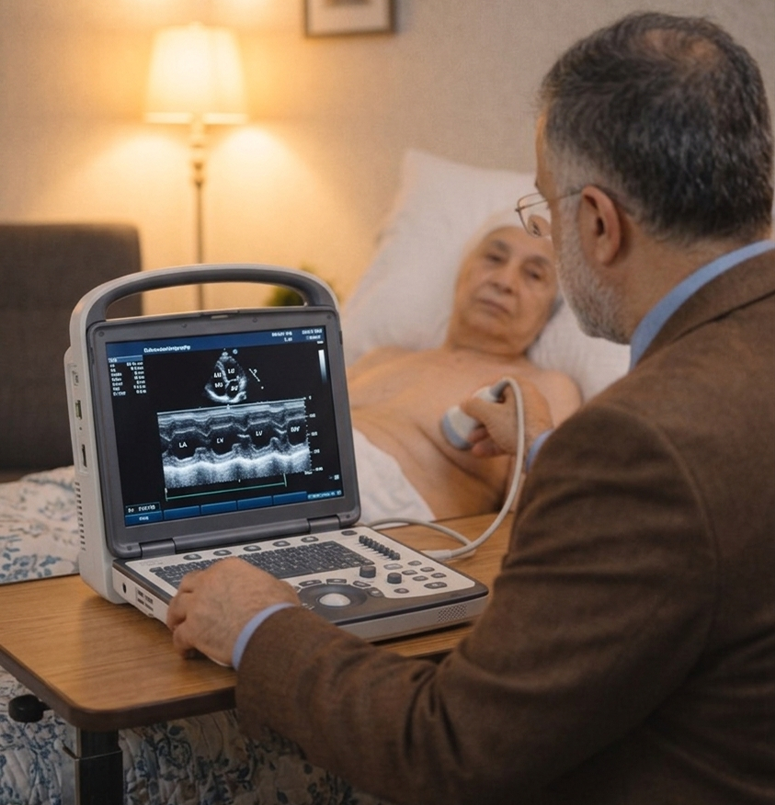
Home Cardiology Services
Selected patients with limited mobility may benefit from home cardiology services.
Available services may include:
- Home cardiology consultation
- Home ECG
- Home echocardiography
- Home Holter monitoring
These services are particularly valuable for elderly or homebound patients.
Insurance and Reimbursement
The practice collaborates with several private insurance providers in Turkey, including:
- Allianz Insurance
- Acıbadem Insurance
- Anadolu Insurance
- Türkiye Insurance
- Mapfre Insurance
Patients covered by other Turkish or international insurance plans may receive detailed medical reports and invoices according to their reimbursement policies.
Location
The office is located in Kozyatağı, Kadıköy, Istanbul and is easily accessible from different parts of the city.
Appointment and Consultation
International patients seeking an English-speaking cardiologist in Istanbul for hypertension, palpitations, chest pain, cardiovascular risk assessment, heart check-ups or second opinions may benefit from comprehensive cardiac evaluation.
The objective is to provide accurate diagnosis, evidence-based recommendations and personalized cardiovascular care focused on long-term clinical benefit.
Who Is It For?
- People with chest discomfort, palpitations, breathlessness, or blood-pressure concerns
- Those with a family history of early heart disease or multiple cardiovascular risk factors
- Patients seeking a check-up, second opinion, or preventive cardiology review
- Older adults or mobility-limited patients who need home monitoring
- Patients covered by private health insurance planning a cardiology assessment
- Anyone needing pre-operative or pre-procedural cardiac risk evaluation
Evaluation Process
-
Step 1
Initial consultation and review of symptoms and risk history
-
Step 2
Clinical examination and planning of essential tests
-
Step 3
Integrated interpretation of findings with clear patient education
-
Step 4
Shared decision on follow-up, treatment, or further investigation
-
Step 5
Control visit and longer-term monitoring plan when needed


Frequently Asked Questions
Who is Cardiology Services in Istanbul suitable for?
Cardiology Services in Istanbul is planned for patients with palpitations, chest pain, breathlessness, hypertension follow-up needs, or those seeking preventive cardiology assessment—always based on clinical indication.
How do I book Cardiology Services in Istanbul in Kadıköy / Kozyatağı?
You can reach the clinic by phone or the contact form. Evaluation can be arranged at the practice or, for suitable patients, as a home cardiology visit in Istanbul.
Which tests may be requested during Cardiology Services in Istanbul?
Depending on symptoms and examination findings, ECG, echocardiography, Holter monitoring, laboratory work, or advanced imaging may be considered. Testing is individualized—there is no one-size-fits-all package.
Does private health insurance cover Cardiology Services in Istanbul?
Assessment may be available under private policies such as Allianz, BUPA-Acıbadem, SenCard, Anadolu Sağlık, and Mapfre. Complementary health insurance plans are generally out of scope; please contact us to confirm your policy details.


